Why ROAS Can Be Misleading (And Why Real eCommerce PPC Experts Optimize for Profit)
ROAS is often the first metric eCommerce brands look at when evaluating paid media performance.
And while ROAS is a useful signal for optimizing bidding strategies inside platforms like Google Ads, Meta, and TikTok it is not the metric that ultimately determines business success.
TLDR
- ROAS is useful for optimizing bidding algorithms, but it does not measure true profitability.
- High ROAS can still hide unprofitable campaigns once fees, operations, and product costs are included.
- ACOS is often easier to visualize because it shows ad spend as a percentage of revenue.
- Breaking costs down by percentage makes it clear how ads impact profit margins.
- Real eCommerce PPC consultants optimize for profit first, not platform level ROAS.
Experienced eCommerce PPC consultants know that ROAS alone can hide unprofitable campaigns,
mask margin erosion, and push brands into scaling revenue at the expense of cash flow.
ROAS Is a Bidding Metric, Not a Business Metric
Return on Ad Spend (ROAS) is calculated as:
Revenue ÷ Ad Spend
Platforms like Google Ads and Meta rely on ROAS because it is easy to optimize for at scale.
It allows automated bidding systems to make fast decisions based on historical conversion value.
But ROAS has a major flaw: it ignores everything that happens after the ad click.
That means ROAS does not account for:
- Product cost
- Credit card processing fees
- Fulfillment and shipping
- Operational overhead
- Returns and refunds
A campaign can look incredible inside Google Ads and still lose money once the full picture is considered.
Why ACOS Is Often Easier to Visualize Than ROAS
Many ecommerce brands find ACOS (Advertising Cost of Sale) easier to understand because it shows ad spend as a percentage of revenue.
ACOS is simply the inverse of ROAS:
- 5.0 ROAS = 20% ACOS
- 4.0 ROAS = 25% ACOS
- 10.0 ROAS = 10% ACOS
This framing makes it easier to connect advertising performance directly to profit margins.
Profit Is the Metric That Actually Matters
Strong eCommerce PPC consultants reverse engineer ad performance from profit first, not ROAS targets.
Here is a simplified example:
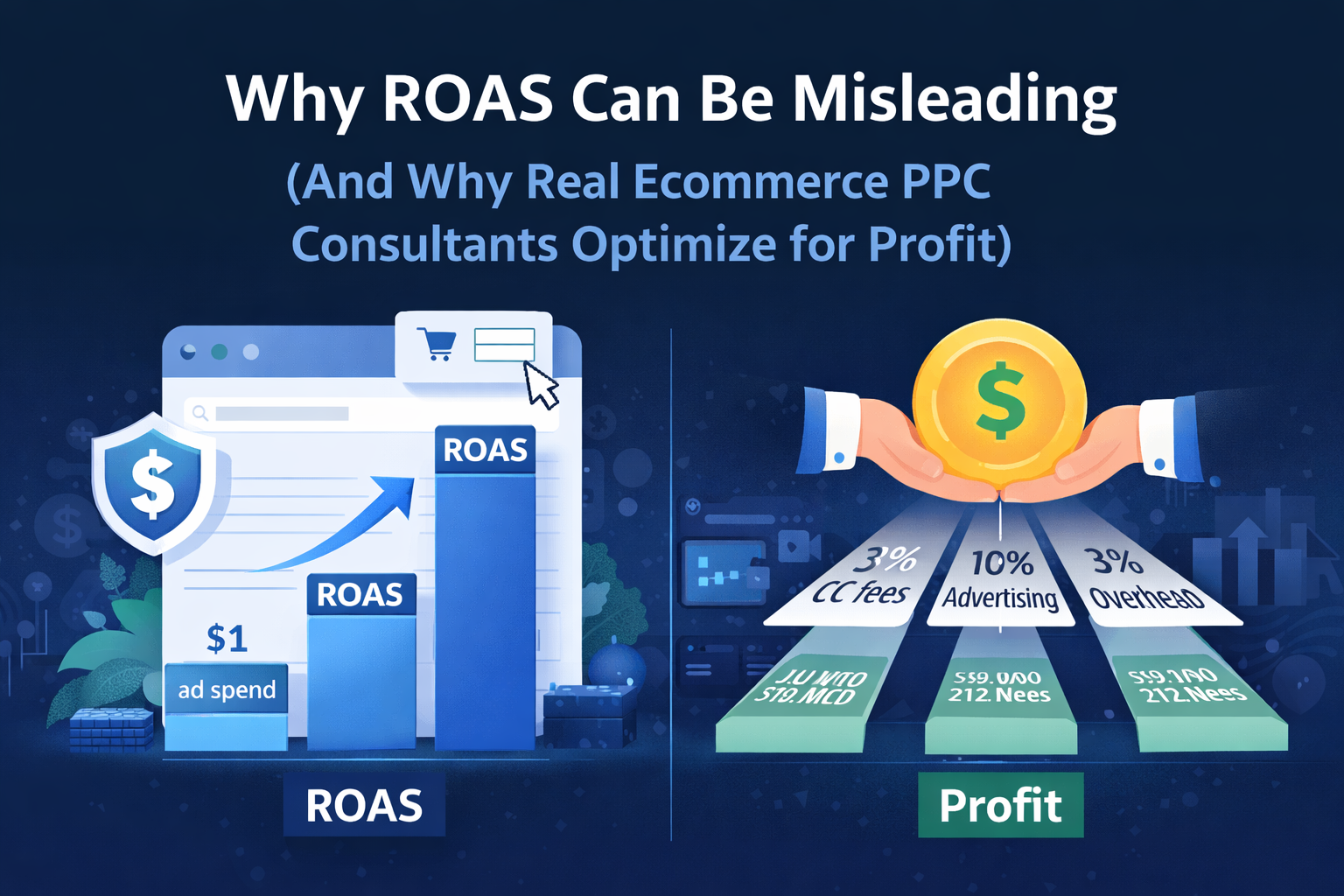
- 3% credit card processing fees
- 10% ACOS for advertising
- 3% operational and software costs
- 20% product cost
Before fulfillment, shipping, and returns, you have already allocated:
36% of revenue
If your gross margin is 45%, your true profit is much thinner than ROAS alone would suggest.
This is why focusing exclusively on ROAS often leads to false confidence and aggressive scaling that breaks profitability.
How Experienced Ecommerce PPC Consultants Use ROAS Correctly
ROAS is still valuable. It just needs to be used in the right context.
Professional PPC consultants use ROAS to:
- Guide automated bidding strategies
- Compare performance across products or categories
- Identify efficiency trends over time
But final decisions are always validated against profit per order and contribution margin.
The Right Way to Set Ecommerce PPC Targets
Instead of asking:
“What ROAS should we target?”
A better question is:
“What ACOS can we afford and still hit our profit goals?”
Once that number is defined, ROAS targets become a tool rather than a goal.
Why This Distinction Matters When Hiring an Ecommerce PPC Consultant
If a consultant only talks about ROAS, CPC, and clicks, they are optimizing inside the ad platform.
If they ask about margins, fulfillment costs, and contribution profit, they are optimizing the business.
That difference is what separates tactical campaign managers from strategic eCommerce PPC consultants.
Final Takeaway
ROAS is great for feeding algorithms. ACOS is easier for humans to understand. Profit is what keeps eCommerce businesses alive.
The best PPC consultants know how to use all three together to scale revenue without sacrificing margin.